If your savings barely earned anything last month, you’re not imagining it. A better account could put your cash to work without changing your routine.
| Account | Typical APY | Monthly Fee | Coverage/Structure | Best Use |
|---|---|---|---|---|
| Marcus by Goldman Sachs | 4.00%-4.50% | $0 | FDIC-insured bank account | Emergency savings |
| Ally Bank | 4.00%-4.40% | $0 | FDIC-insured bank account | Buckets and goal saving |
| Capital One 360 Performance | 4.00%-4.35% | $0 | FDIC-insured bank account | Big-bank familiarity |
| Discover Online Savings | 4.00%-4.35% | $0 | FDIC-insured bank account | Simple setup |
| SoFi Savings | 4.20%-4.60% | $0 | FDIC-insured bank account | Direct deposit users |
| Synchrony High Yield Savings | 4.10%-4.50% | $0 | FDIC-insured bank account | ATM access |
| Wealthfront/Betterment cash accounts | 4.25%-5.00% | $0 | Partner-bank sweep structure | Idle cash management |
01 A bigger APY looks great — until the fine print shows up
Ever move $10,000 into a savings account for a shiny rate, then realize transfers take 3 business days? That little delay matters more than most rate ads admit.
A solid high-yield savings account comparison starts with one truth: the highest APY is not always the best account. As of early 2025, plenty of online banks and cash accounts cluster in the roughly 4.00% to 5.00% APY range, but the real gap shows up in fees, withdrawal speed, mobile experience, and minimum balance rules. I’ve seen readers chase an extra 0.20% APY, only to get annoyed by clunky apps and slow ACH transfers a week later.
Read more about where savings fits in a simple money plan
What matters here is whether the account works for your cash: emergency fund, vacation money, or cash you’re parking for 60 days. Rate matters. Access matters too. And the insurance limit? That matters more than people think.
A savings account should help you sleep better, not make you read 14 pages of disclosures at 11 p.m.
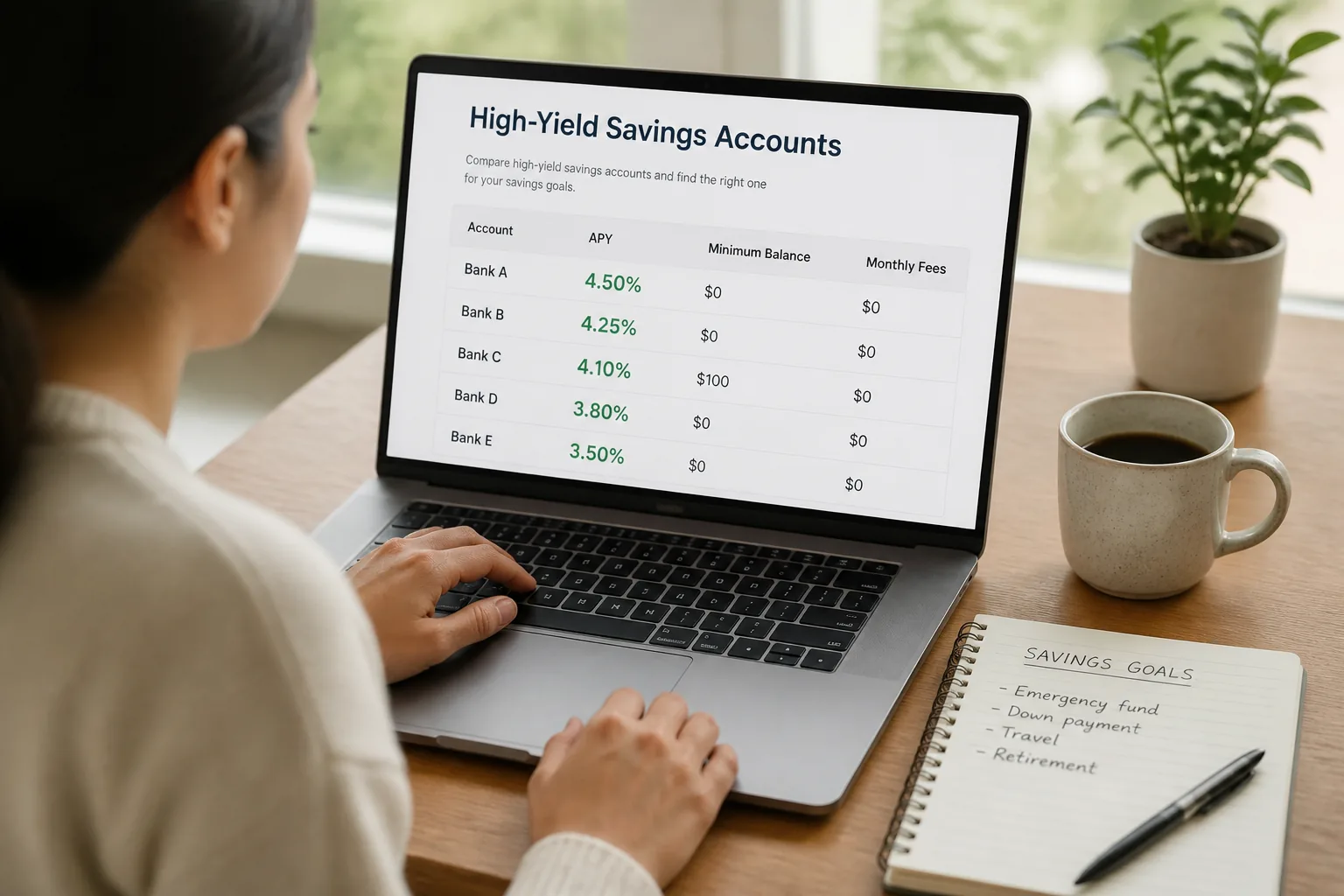
Next, let’s line up 7 account types worth checking so the trade-offs are easy to spot.
02 7 rates worth checking, with the trade-offs right there
Quick comparison: rates change often, so treat these as a snapshot, not a promise.
| Account type/provider example | Typical APY range | Monthly fee | Best for |
|---|---|---|---|
| Marcus by Goldman Sachs | 4.00%-4.50% | $0 | Simple emergency savings |
| Ally Bank | 4.00%-4.40% | $0 | Strong app and buckets |
| Capital One 360 Performance | 4.00%-4.35% | $0 | Big-name bank comfort |
| Discover Online Savings | 4.00%-4.35% | $0 | Straightforward setup |
| SoFi Savings* | 4.20%-4.60% | $0 | Existing direct deposit users |
| Synchrony High Yield Savings | 4.10%-4.50% | $0 | ATM access matters |
| Wealthfront/Betterment cash accounts* | 4.25%-5.00% | $0 | Idle cash with sleek tools |
*Rates and eligibility can depend on linked services or program terms.
Pros people care about:
- No monthly maintenance fee
- No or low minimum opening deposit
- Fast external transfers
- Clear FDIC or NCUA coverage details
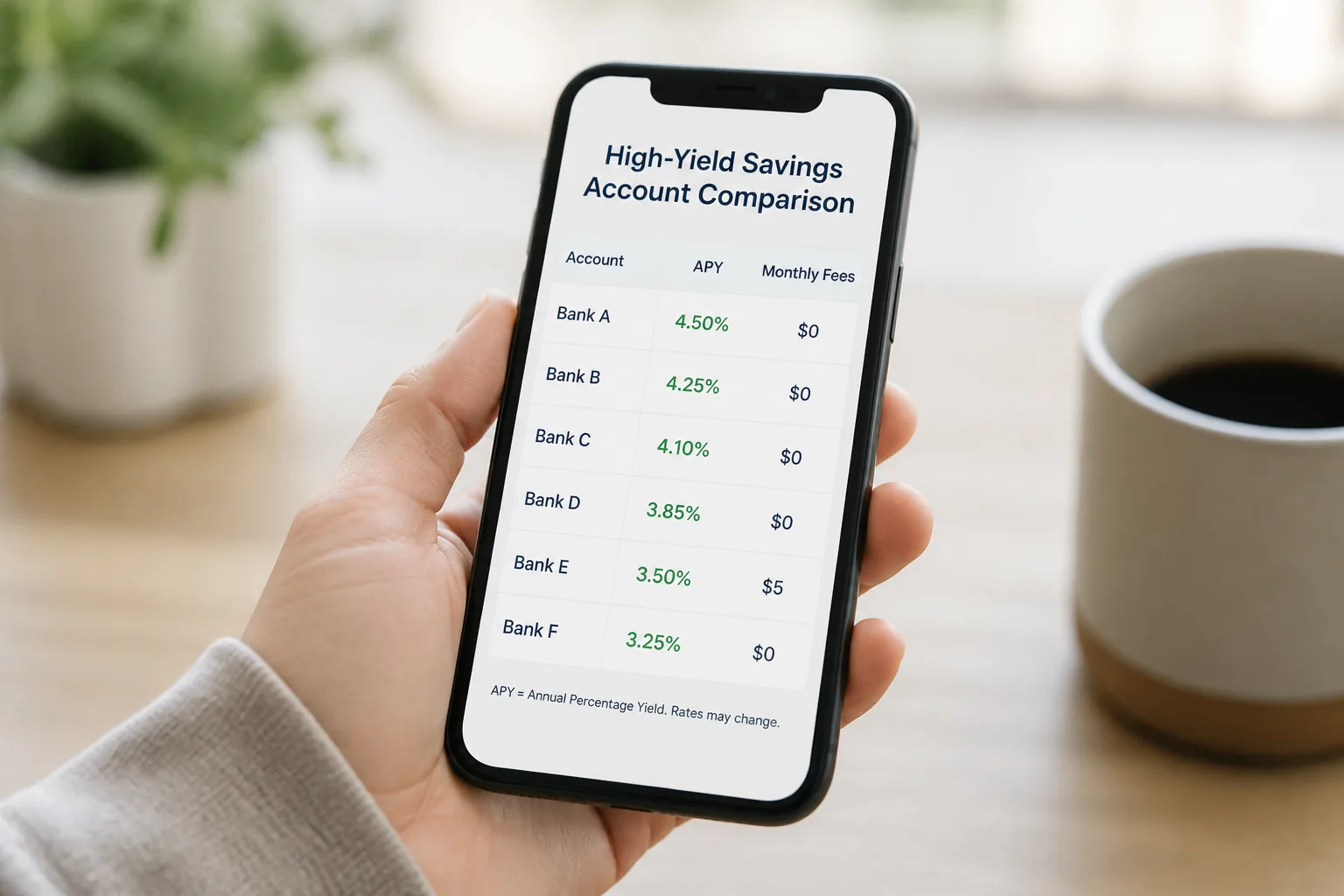
The rate list gets attention, sure, but the next section is where the expensive mistakes usually happen.
03 What nobody tells you about access speed and account rules
Here’s the part people skip. Cash timing can beat rate chasing.
Say Mia keeps a $15,000 emergency fund. Bank A pays 4.50% APY, Bank B pays 4.30%. That 0.20% spread is about $30 a year before taxes on that balance. Nice, but not life-changing. If Bank A takes 3 business days to move money and Bank B lands funds next day, Mia may gladly give up that $30 for faster access. Honestly, I would.
Then there are account rules. Some banks limit outbound transfers in practice, some hold newly deposited funds longer, and some make joint account setup weirdly annoying. A friend of mine opened an account for a house down payment and got tripped up by verification delays that stretched nearly 5 days. Bad timing. Very bad timing.
The best account is the one you’ll still like after the first transfer, not the first ad.
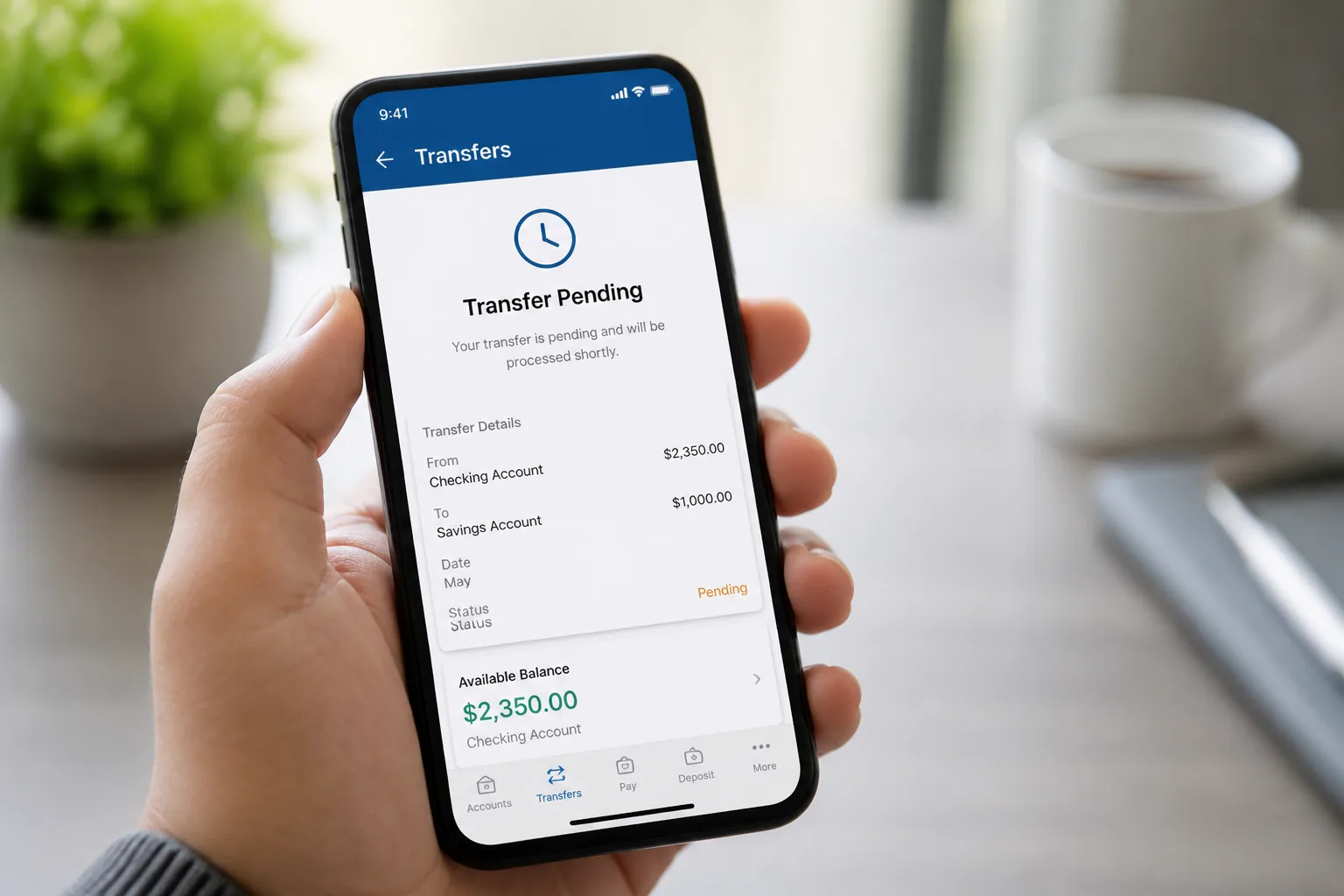
Quick recap:
- Rate is the headline
- Access is the reality
- Rules are where surprises live
See our guide on how much emergency cash to keep
One more thing deserves a closer look: insurance limits, because this is where confidence comes from.
04 The safety question: FDIC, NCUA, and those cash account wrinkles
Most high-yield savings accounts at banks carry FDIC insurance up to $250,000 per depositor, per bank, per ownership category. Credit unions usually use NCUA insurance with the same standard limit. Clean and familiar.
Cash management accounts can get trickier. Some spread deposits across partner banks, which may raise total covered balances above $250,000. That can be useful for larger cash piles, but you need to read the program details. Which banks hold the money? How often does the sweep happen? Are all balances covered the same way on day one? Those questions are boring right up until they matter.
If you’re parking $8,000 for travel or $20,000 for a car, standard insurance is usually straightforward. If you’re holding $300,000 after a home sale, stop and map the ownership categories first. Period.
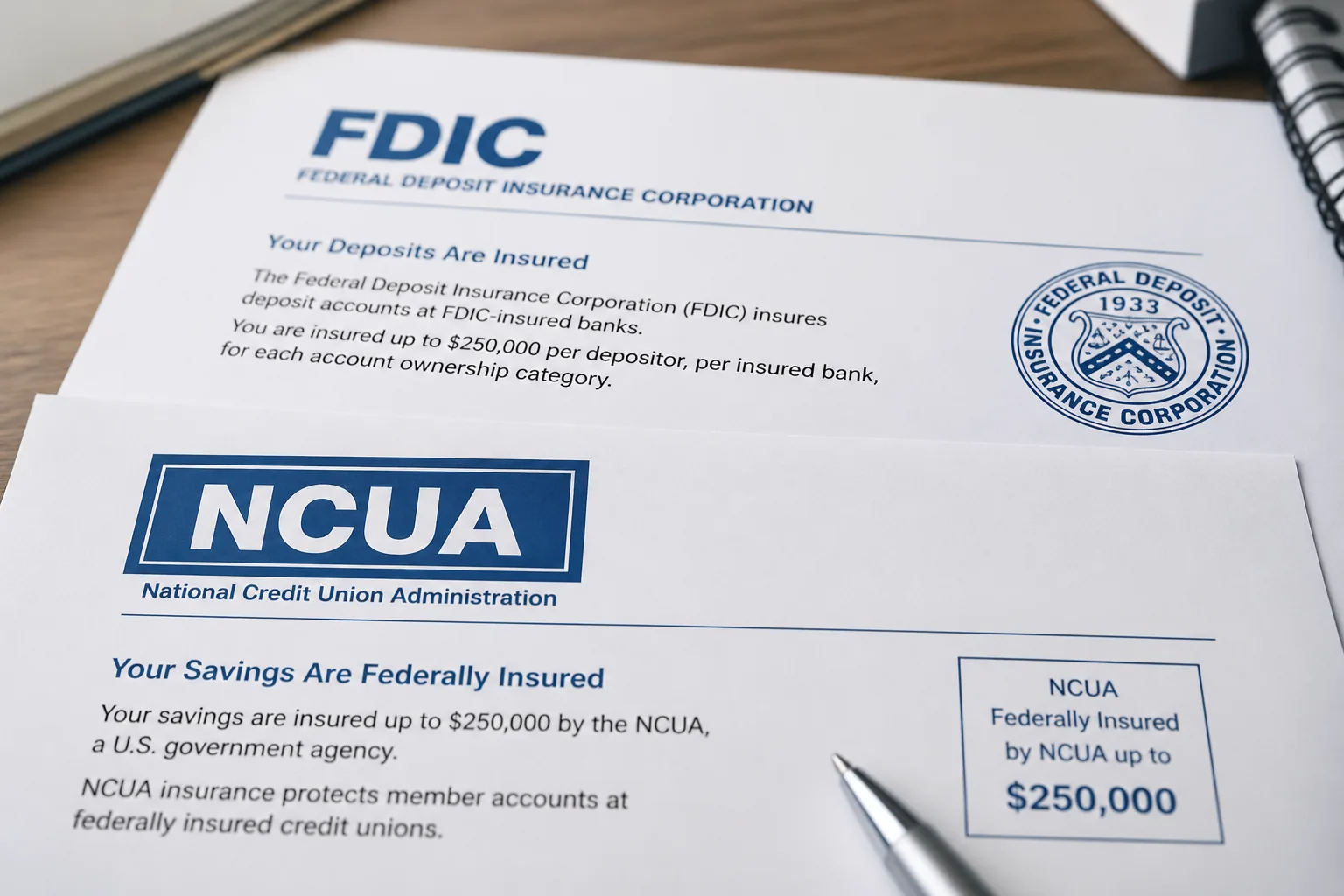
Related: compare bank perks with the right credit card setup
The last step is choosing based on your actual goal, not somebody else’s spreadsheet.
05 Pick the account for the job, then act today
Best fit by scenario:
- Emergency fund: Favor no fees and fast transfers.
- Short-term goal in 6-12 months: Chase a competitive APY, but keep access easy.
- Large idle cash balance: Double-check insurance structure first.
If I were choosing today, I’d ignore tiny APY gaps and focus on friction. A clean app, quick transfers, and transparent rules beat a flashy promo rate that disappears in 90 days. That’s the short version.
– Pull up your current savings APY and compare it with 3 online options
- Read the transfer and deposit-hold policy before applying
- Keep balances under insurance limits unless you’ve mapped coverage deliberately
Good savings decisions are usually boring. Boring is beautiful when your cash is safe and earning.
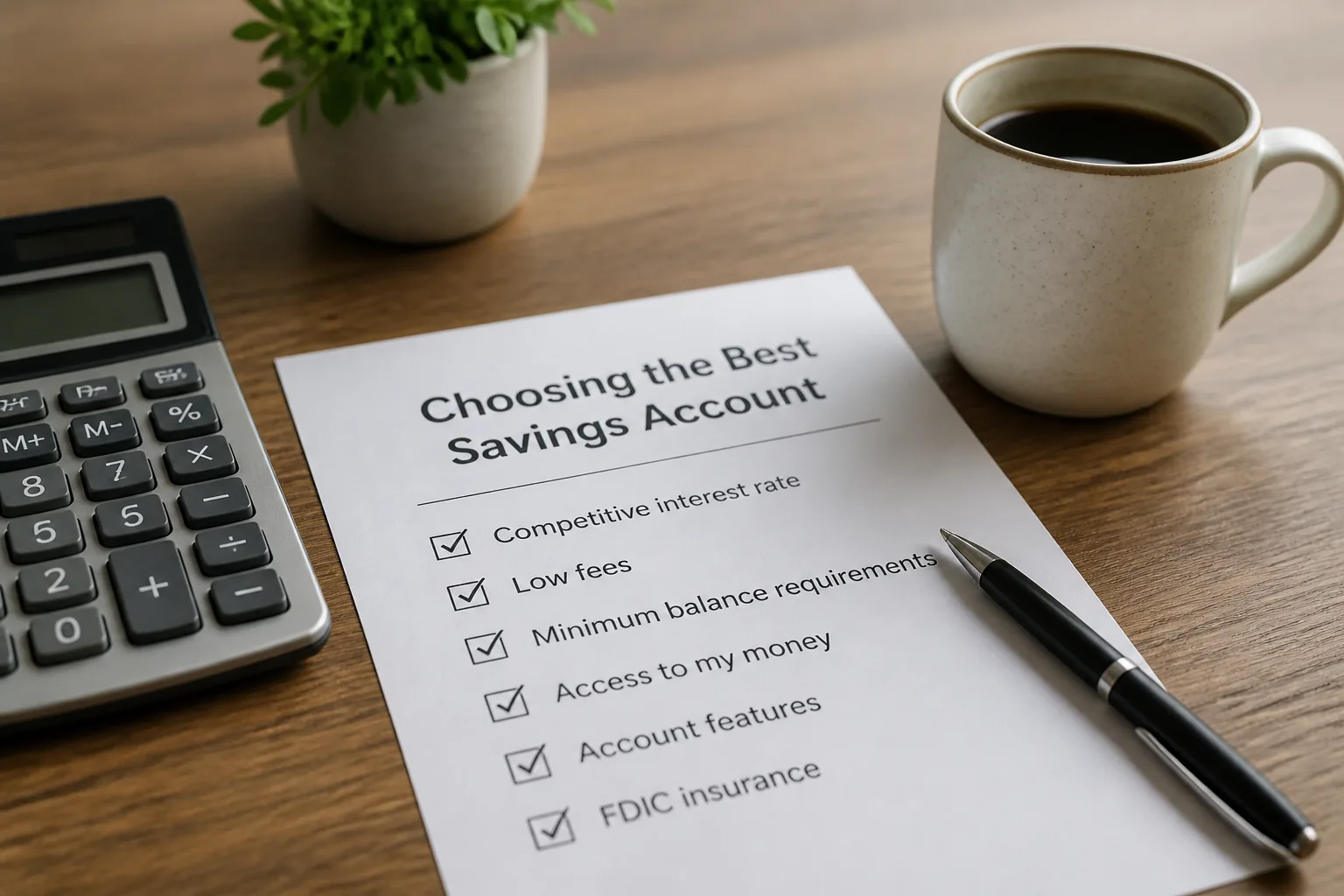
If your current bank is paying almost nothing, moving your cash this week could be one of the easiest money upgrades you make all year.