If you’ve been putting off investing because it feels confusing or expensive, you’re not alone. The first step is usually much smaller and simpler than people expect.
01 Start here, not with a stock tip
Ever notice how investing advice usually starts with Tesla, Nvidia, or some “can’t-miss” fund? That’s backwards. If you’ve got $100 and a real life, your first move is getting the order right: cash buffer, debt check, then investing.
I’ve watched friends skip that step and regret it fast. One put $500 into a brokerage account in 2022, then had to sell two weeks later for a car repair. Bad timing, small loss, big frustration. That’s why starting small beats starting sloppy.
read our beginner’s guide to investment basics
The first investing win usually isn’t a huge return. It’s avoiding an expensive mistake.

Quick recap:
- Build a mini emergency fund first
- Knock out credit card debt above roughly 18% APR
- Pick the account that matches your goal
That last point changes everything, and it’s where beginners usually get tripped up.
02 The boring first move that saves your future self
Before you buy a single fund, aim for $500 to $1,000 in emergency cash. That number won’t cover every crisis, sure, but it can handle a tire, copay, or surprise bill without forcing you to sell investments on a bad day.
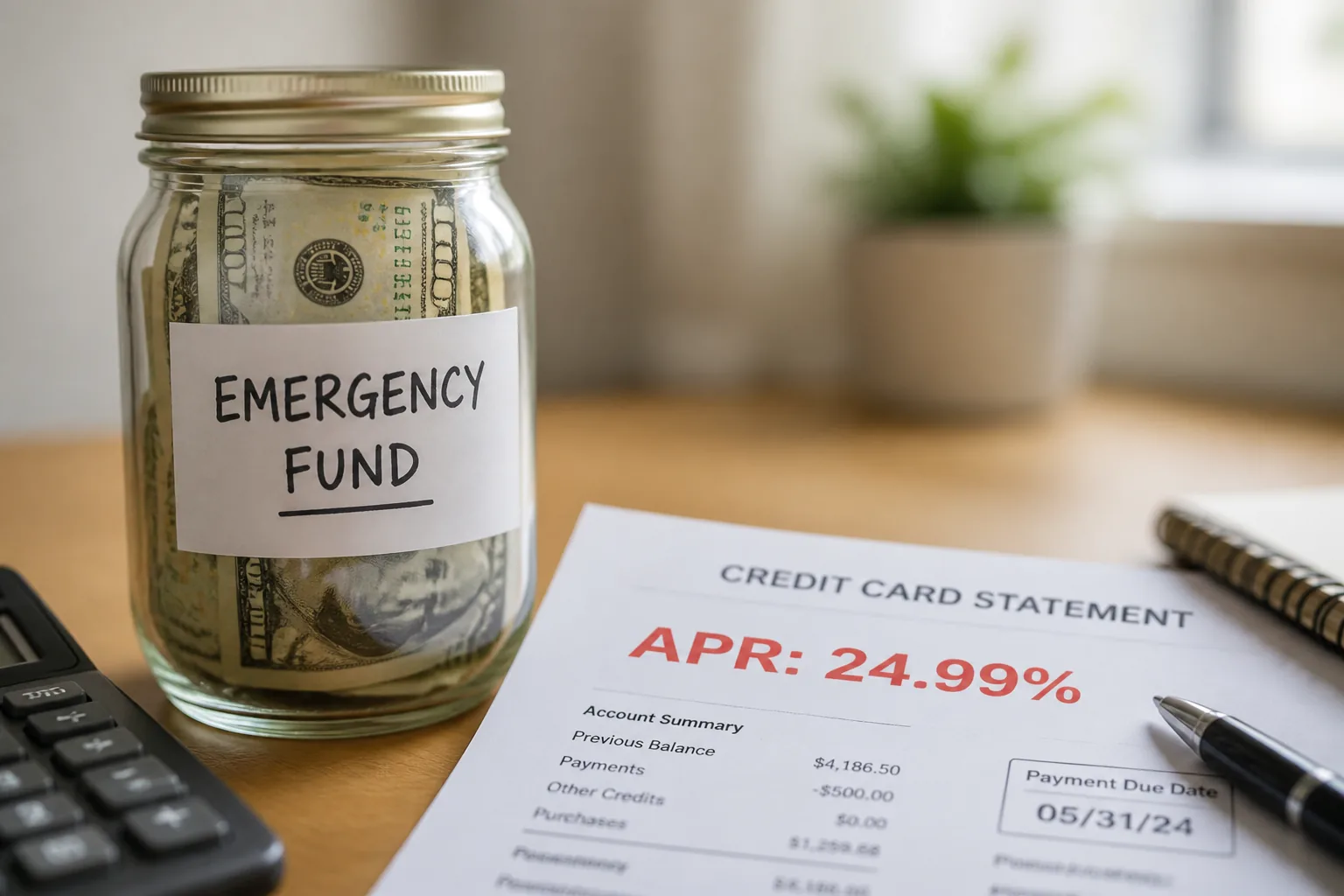
A simple order works for most people:
- Save your first $500
- Pay off toxic debt
- Start investing every month, even if it’s just $25
03 Pick the account before you pick the fund
Here’s the part nobody tells beginners: the account matters as much as the investment. A 401(k), IRA, and taxable brokerage account can all hold the same index fund, yet the tax rules are wildly different.
If your employer offers a 401(k) match, start there. A 50% match on the first 6% of pay is hard to beat. If there’s no match, a Roth IRA often makes sense for beginners because qualified withdrawals in retirement are tax-free. A standard brokerage account is the flexible option when you may need the money before retirement.
- 401(k): best for employer match
- Roth IRA: strong pick for long-term retirement savings
- Brokerage account: best for flexibility and no retirement rules
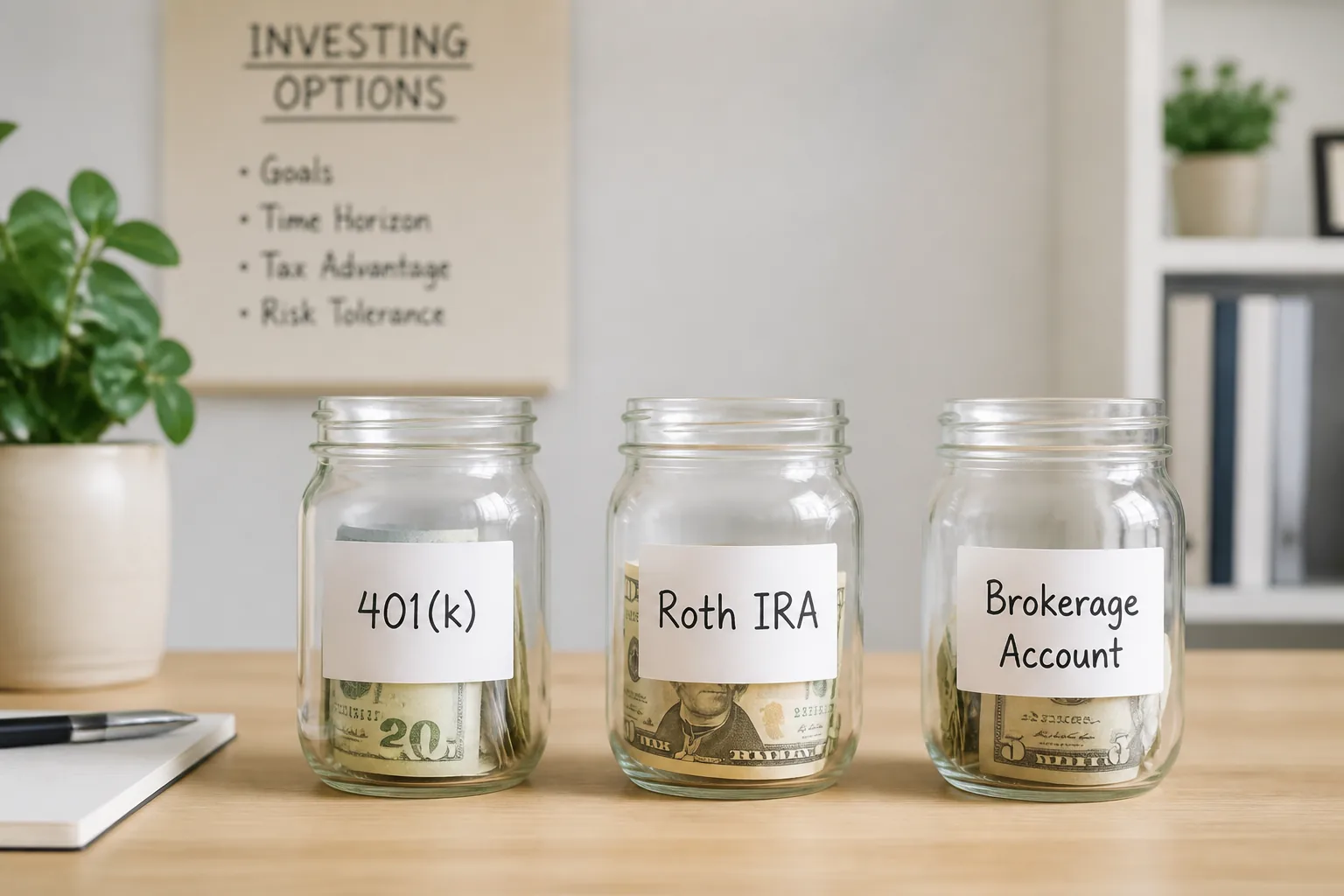
A friend of mine opened a brokerage account first, then realized a year later she had skipped her company match. That was free money left on the table.
see our guide to 401(k) and IRA basics →
Good investing is often just good account selection wearing plain clothes.
Now for the part people actually want to buy.
04 Why low-cost index funds keep winning
With $100, you do not need a “next Amazon” story. You need broad exposure, low fees, and time. That’s why index funds and ETFs are usually the smartest first move. Funds tracking the S&P 500 or total U.S. stock market spread your money across hundreds of companies in one purchase.
Expense ratios matter more than they look. A fund charging 0.03% leaves far more in your pocket than one charging 1.00%, especially over 20 or 30 years. Morningstar and SEC filings both make those costs easy to check. Honestly, this surprised me when I first ran the math.
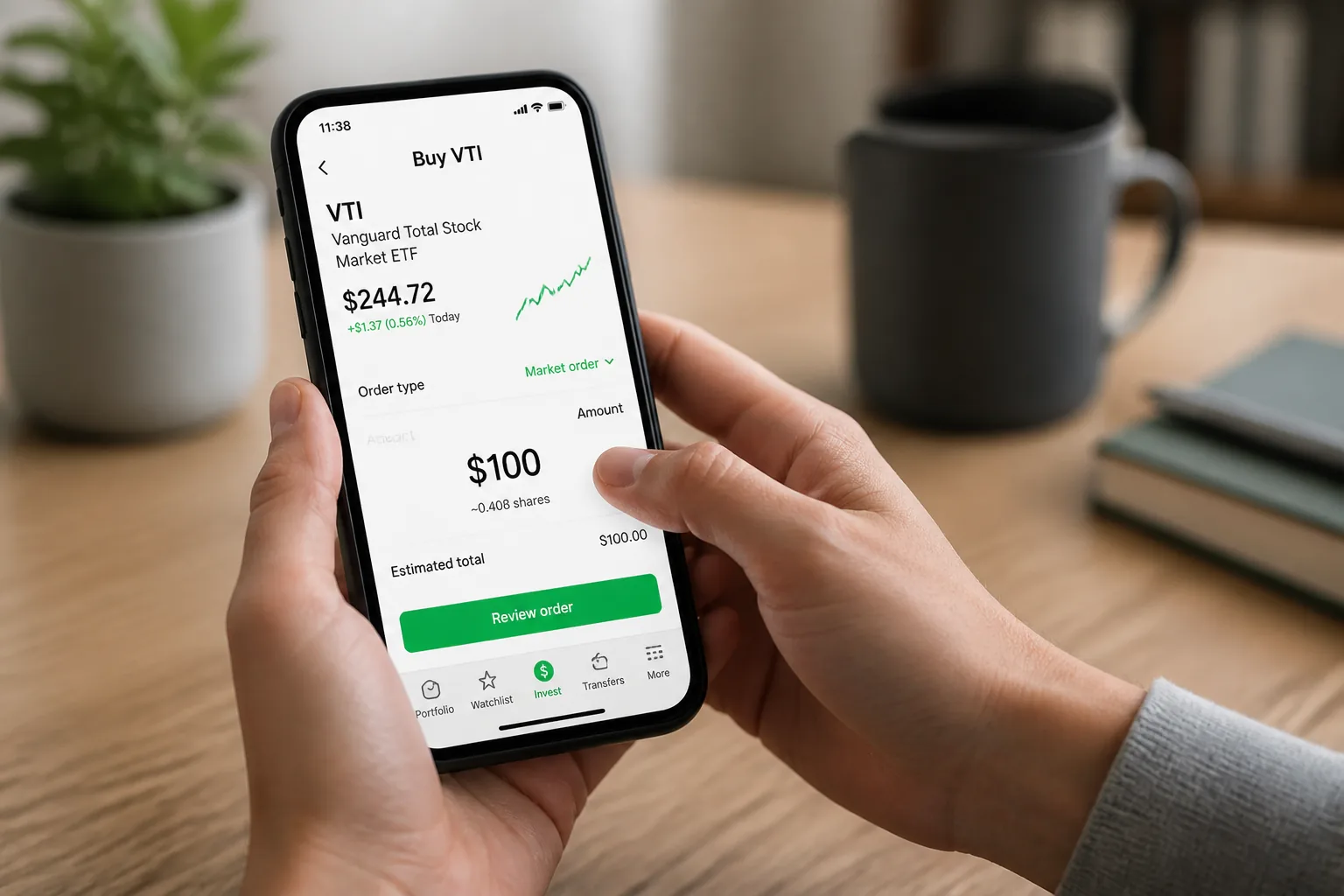
read more about low-cost index fund strategies
The last step is simple, but this is where consistency beats excitement every single time.
05 Your first $100 plan for this week
Keep it plain. Keep it repeatable. If I were helping a beginner on a Tuesday night over coffee, I’d suggest this:
- Put $50 into emergency savings today
- Use $25 toward any credit card balance above 18% APR
- Invest the last $25 in a low-cost index fund inside the right account
If you already have savings and no high-interest debt, shift the full $100 into your 401(k), Roth IRA, or brokerage account. Then automate the next deposit for payday. Even $25 every two weeks builds the habit that matters most.

You do not need perfect timing. You need a system you’ll still follow six months from now.
That’s the real start: not chasing returns, but building a setup that survives real life.