Skip to content

InkRoots Blog

  • Home
  • About
  • Technology
  • AI & ML
  • Business
  • Lifestyle

How to Start Investing With $100: 3 Smart First Moves

May 27, 2026 by admin
Inkroots Editorial Team · 10min read · 2026-05-27
Quick Summary
  1. Start with a $500 emergency fund before buying your first investment.
  2. Pay off credit card debt above 18% APR before chasing market returns.
  3. Use a 401(k) match or Roth IRA before a regular brokerage account.
  4. Low-cost index funds are often the smartest first buy with $100.
Key Takeaways

Starting to invest isn’t about finding a hot stock. It’s about getting the order right: build an emergency fund first, pay off high-interest debt, then choose the best account for your goal. The article breaks down beginner-friendly options like 401(k)s, IRAs, and brokerage accounts, along with why low-cost index funds are often the smartest first move. It also explains risk, time horizon, and diversification in plain English, so you can avoid rookie mistakes before they get expensive.

If you’ve been putting off investing because it feels confusing or expensive, you’re not alone. The first step is usually much smaller and simpler than people expect.

Table of Contents
  1. Start here, not with a stock tip
  2. The boring first move that saves your future self
  3. Pick the account before you pick the fund
  4. Why low-cost index funds keep winning
  5. Your first $100 plan for this week

01 Start here, not with a stock tip

Ever notice how investing advice usually starts with Tesla, Nvidia, or some “can’t-miss” fund? That’s backwards. If you’ve got $100 and a real life, your first move is getting the order right: cash buffer, debt check, then investing.

I’ve watched friends skip that step and regret it fast. One put $500 into a brokerage account in 2022, then had to sell two weeks later for a car repair. Bad timing, small loss, big frustration. That’s why starting small beats starting sloppy.

read our beginner’s guide to investment basics

The first investing win usually isn’t a huge return. It’s avoiding an expensive mistake.

budgeting before investing with first $100

Quick recap:

  • Build a mini emergency fund first
  • Knock out credit card debt above roughly 18% APR
  • Pick the account that matches your goal

That last point changes everything, and it’s where beginners usually get tripped up.

02 The boring first move that saves your future self

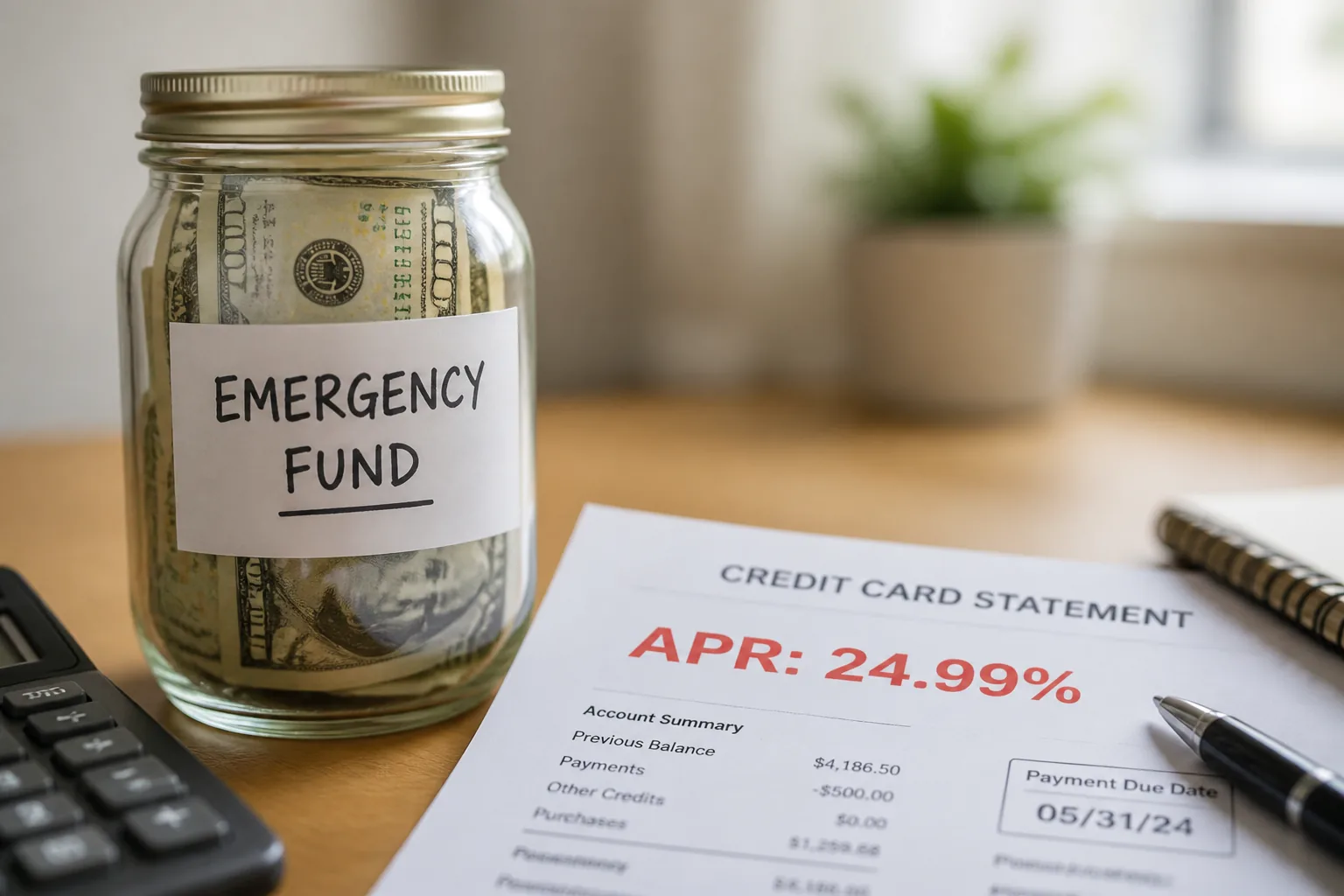
Before you buy a single fund, aim for $500 to $1,000 in emergency cash. That number won’t cover every crisis, sure, but it can handle a tire, copay, or surprise bill without forcing you to sell investments on a bad day.
⚠️
Warning: If you’re carrying credit card debt at 24% APR, investing first is usually a losing race. A stock index fund might average about 8% to 10% a year over long stretches. Your card issuer is charging triple that. Period.
Before24% APR
→
After10% market return
Why high-interest debt comes first
emergency savings and debt payoff priority

A simple order works for most people:

  1. Save your first $500
  2. Pay off toxic debt
  3. Start investing every month, even if it’s just $25
💡
Tip: Put your emergency fund in a high-yield savings account, not your checking account. The small separation helps more than people expect. Next up is the account choice, and that’s where your $100 can actually start pulling weight.

03 Pick the account before you pick the fund

Here’s the part nobody tells beginners: the account matters as much as the investment. A 401(k), IRA, and taxable brokerage account can all hold the same index fund, yet the tax rules are wildly different.

If your employer offers a 401(k) match, start there. A 50% match on the first 6% of pay is hard to beat. If there’s no match, a Roth IRA often makes sense for beginners because qualified withdrawals in retirement are tax-free. A standard brokerage account is the flexible option when you may need the money before retirement.

  • 401(k): best for employer match
  • Roth IRA: strong pick for long-term retirement savings
  • Brokerage account: best for flexibility and no retirement rules
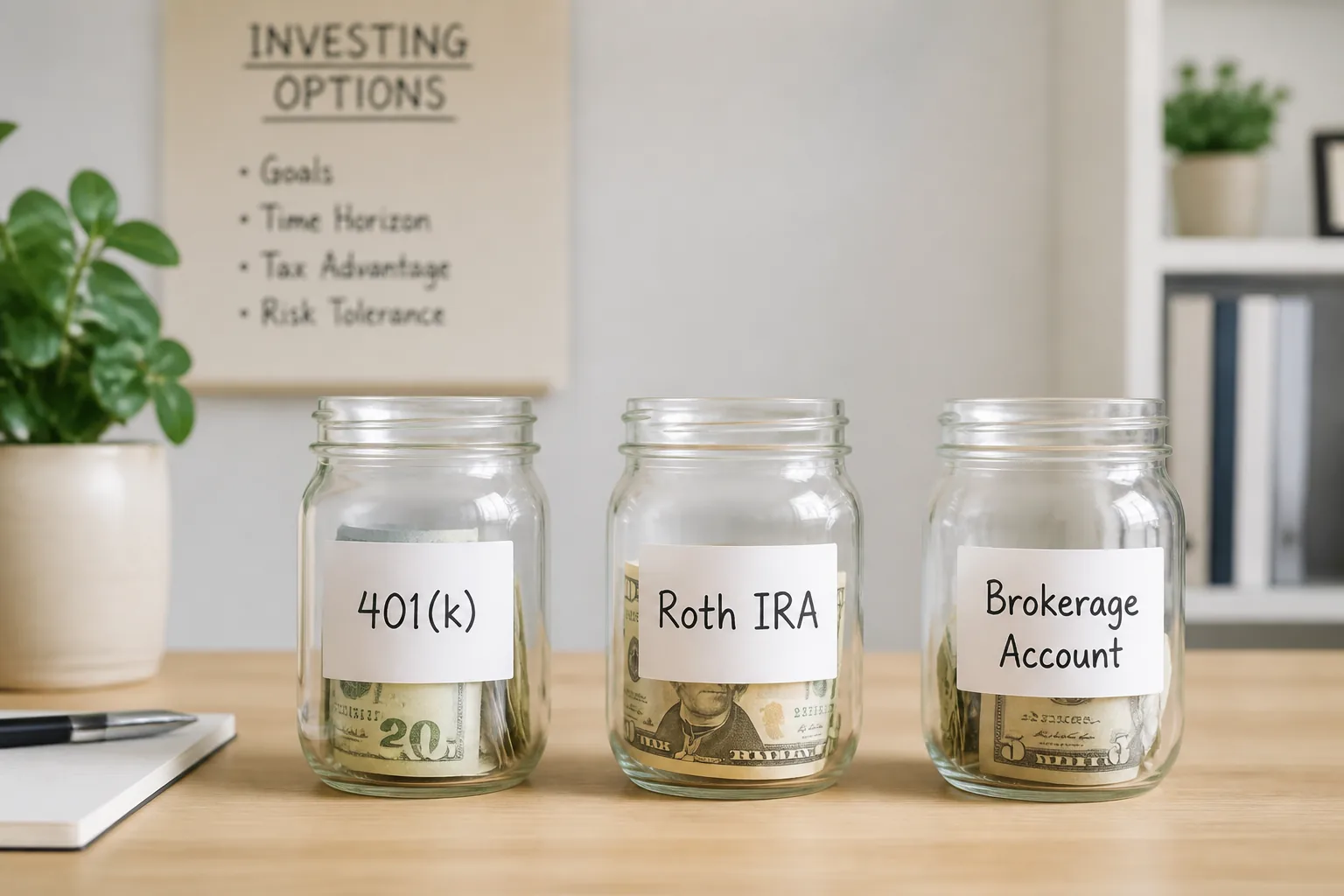
beginner investing account options compared

A friend of mine opened a brokerage account first, then realized a year later she had skipped her company match. That was free money left on the table.

see our guide to 401(k) and IRA basics →

Good investing is often just good account selection wearing plain clothes.

Now for the part people actually want to buy.

04 Why low-cost index funds keep winning

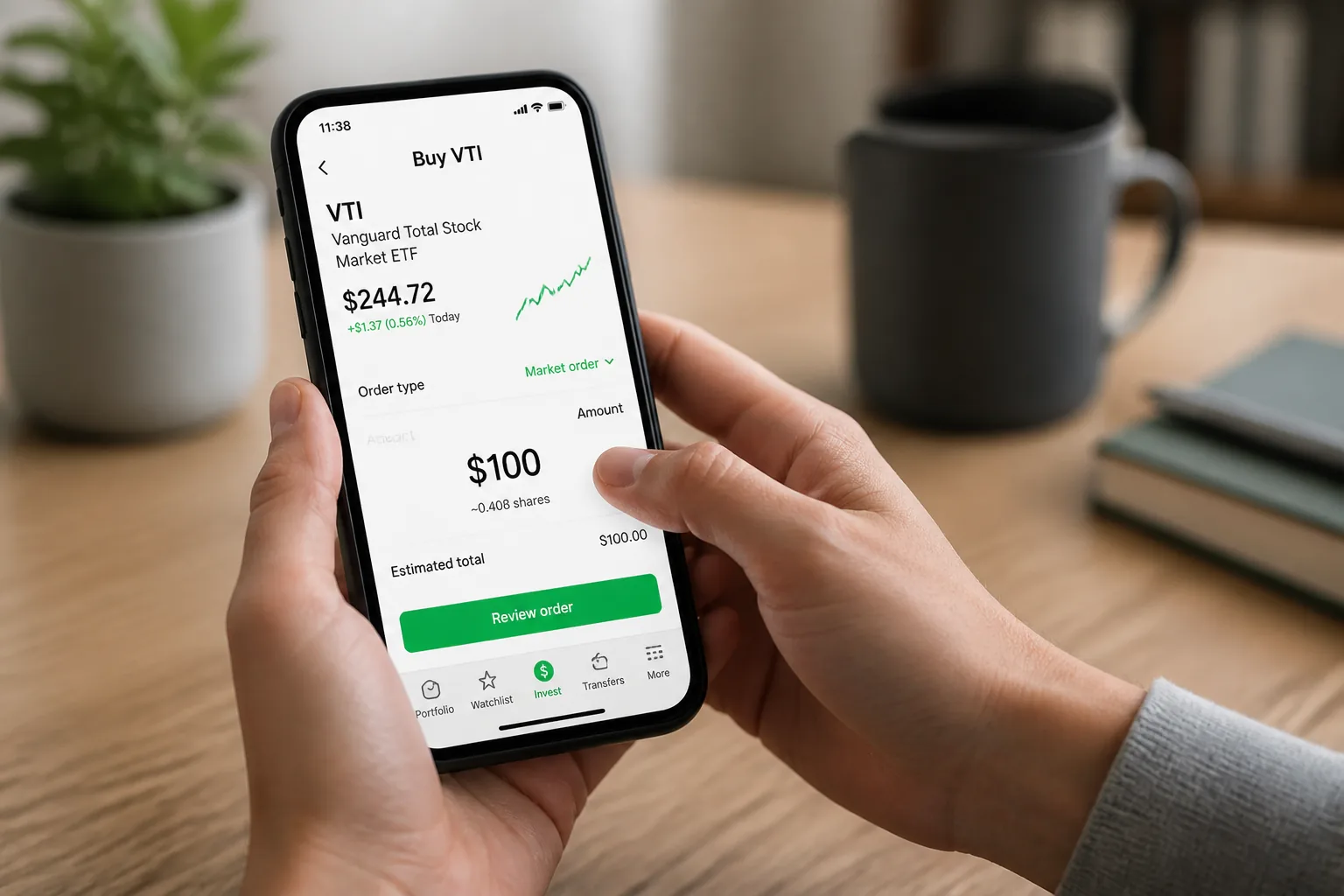
With $100, you do not need a “next Amazon” story. You need broad exposure, low fees, and time. That’s why index funds and ETFs are usually the smartest first move. Funds tracking the S&P 500 or total U.S. stock market spread your money across hundreds of companies in one purchase.

Expense ratios matter more than they look. A fund charging 0.03% leaves far more in your pocket than one charging 1.00%, especially over 20 or 30 years. Morningstar and SEC filings both make those costs easy to check. Honestly, this surprised me when I first ran the math.
Before0.03% fee
→
After1.00% fee
Small costs, huge long-term drag
buying a beginner-friendly index fund
💡
Tip: If your timeline is under 3 years for a house, wedding, or move, don’t put that money heavily into stocks. That’s savings money, not investing money.

read more about low-cost index fund strategies

The last step is simple, but this is where consistency beats excitement every single time.

05 Your first $100 plan for this week

Keep it plain. Keep it repeatable. If I were helping a beginner on a Tuesday night over coffee, I’d suggest this:

  1. Put $50 into emergency savings today
  2. Use $25 toward any credit card balance above 18% APR
  3. Invest the last $25 in a low-cost index fund inside the right account

If you already have savings and no high-interest debt, shift the full $100 into your 401(k), Roth IRA, or brokerage account. Then automate the next deposit for payday. Even $25 every two weeks builds the habit that matters most.

first 100 dollars investing checklist

You do not need perfect timing. You need a system you’ll still follow six months from now.

That’s the real start: not chasing returns, but building a setup that survives real life.

FAQ

Can I really start investing with just $100?
Yes. Many brokerages let you buy fractional shares or low-minimum ETFs. If your emergency fund is thin or your debt is expensive, split that $100 first. A small, steady plan beats waiting for the “right” amount.
Should I pay off debt or invest first?
Check the interest rate. Credit card debt above roughly 18% APR usually comes before investing because that guaranteed cost is higher than long-run market averages. Lower-rate student loans or mortgages are a closer call.
What account should a beginner open first?
Start with a 401(k) if your employer offers a match. No match? A Roth IRA is often a strong next choice for retirement savings. Use a brokerage account for goals that may come before retirement.
How risky are index funds for beginners?
They still rise and fall with the market, so they’re not risk-free. The advantage is diversification across many companies instead of betting on one stock. They work best when your timeline is at least five years, preferably longer.
Share
XFacebook
I
Inkroots Editorial Team
Editorial Team
This article was planned by our editorial team based on publicly available data, drafted with AI assistance, and reviewed by human editors before publication. For corrections, please contact us via our contact page.
KEYWORDS
401k vs IRA for beginnersbest brokerage account for beginners 2025best way to start investing for beginnershow much money do you need to start investinghow to start investing in index fundshow to start investing in your 20show to start investing with $100
Categories Technology Tags 401k vs IRA for beginners, best brokerage account for beginners 2025, best way to start investing for beginners, how much money do you need to start investing, how to start investing in index funds, how to start investing in your 20s, how to start investing with $100
Travel Rewards Credit Card: 5 Picks for Bigger Miles
Index Funds vs ETF: 5 Key Differences That Matter
  • About
  • Contact
  • Privacy Policy
  • Terms of Service
  • Disclaimer
© 2026 InkRoots Blog • Built with GeneratePress
This site uses cookies for traffic analysis and personalized ads. By continuing, you agree to our Privacy Policy.